

Wednesday, November 11, 2026Subscribe Free
Defense & SecurityPublished November 10, 2026•7 min read

The Malacca Dilemma: Why 80% of East Asia's Energy Runs Through a 1.5-Mile Bottleneck

A deep dive into the world's most critical maritime chokepoint, naval power balances, and emerging bypass corridors.

Dr. Vikramaditya Sen

Dr. Vikramaditya Sen

Senior Fellow, Maritime Security & Indo-Pacific Strategy

The Malacca Dilemma: Why 80% of East Asia's Energy Runs Through a 1.5-Mile Bottleneck
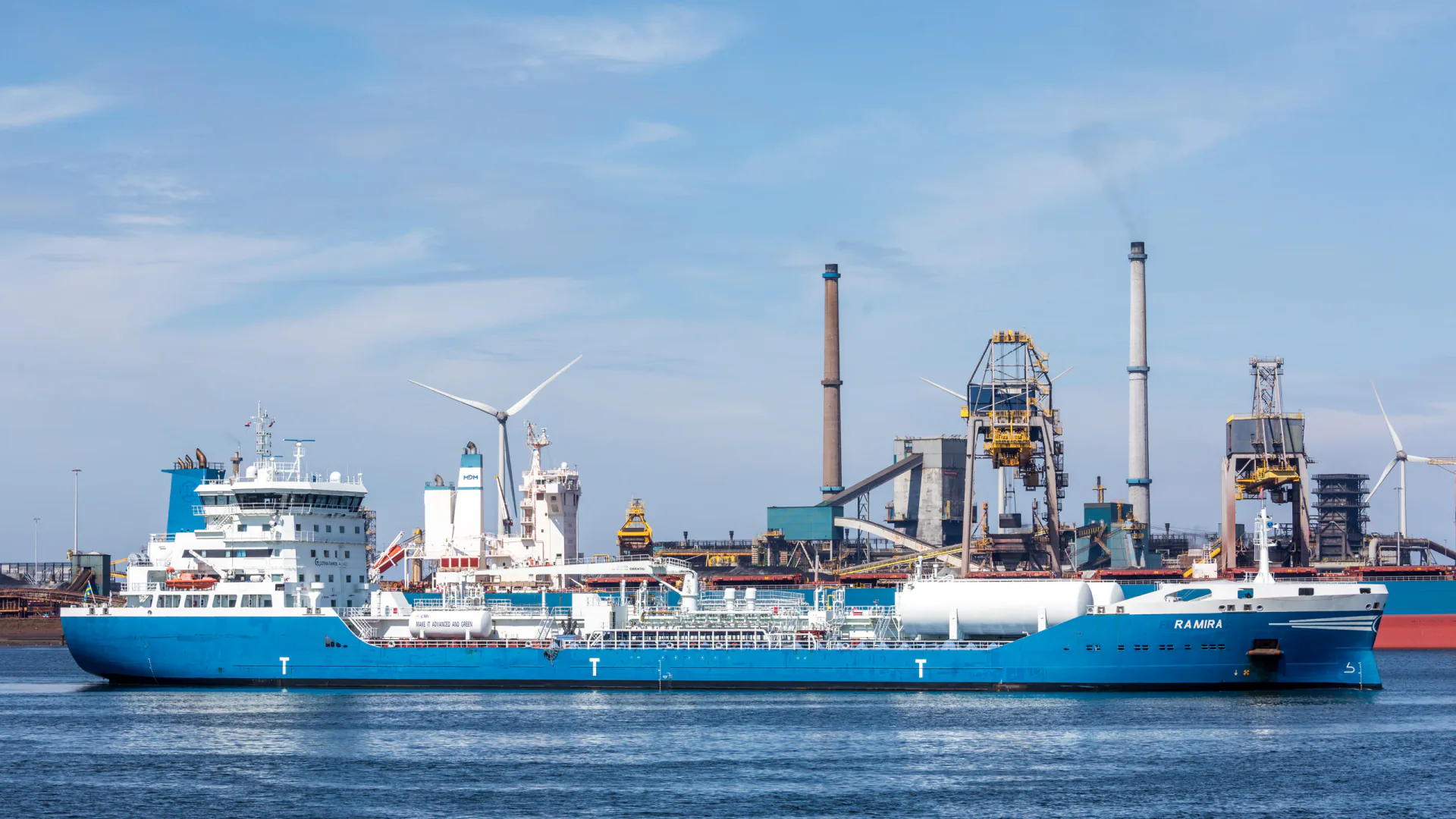
Commercial container vessel navigating the narrow sea lines of the Singapore and Malacca Straits.

Strategic Executive Summary

  • ▪The Phillips Channel in the Singapore Strait narrows to just 1.7 miles (2.8 km), forming a severe operational bottleneck.
  • ▪China imports over 75% of its crude oil by sea, with approximately 80% navigating through this single passage.
  • ▪India's Tri-Services Command at the Andaman and Nicobar Islands sits directly at the western throat of the strait (Six Degree Channel).
  • ▪Proposed bypasses like Thailand's Kra Isthmus land bridge face massive economic hurdles and local environmental resistance.

1. The Geography of Vulnerability

Connecting the Indian Ocean to the South China Sea, the Strait of Malacca spans roughly 550 nautical miles. While wide at its northwestern mouth, it constricts dramatically near Singapore, where the navigable channel narrows to a mere 1.5 nautical miles with a minimum depth of 25 meters.

This natural topography creates an acute vulnerability for commercial navigation. Supertankers (VLCCs) operate with draft tolerances as tight as 3 meters above the seabed, moving at restricted speeds in single-file traffic separation schemes.

⚡ Key Intelligence Marker
"16+ Million Barrels of crude oil pass through Malacca every single day, twice the volume of the Suez Canal and four times that of the Panama Canal."

— U.S. Energy Information Administration (EIA)

2. The 'Malacca Dilemma' Doctrine

In 2003, Chinese leadership officially coined the phrase 'Malacca Dilemma' to characterize the strategic anxiety of having national economic lifelines exposed to foreign interdiction. In a severe crisis or naval embargo, closing the strait would force commercial traffic to divert around Indonesia's Sunda or Lombok Straits, adding 3 to 5 sailing days and billions of dollars in logistical freight surcharges.

To mitigate this structural dependence, Beijing launched multi-billion dollar overland infrastructure under the Belt and Road Initiative, including the China-Pakistan Economic Corridor (CPEC) to Gwadar port and the Sino-Myanmar oil and gas pipelines to Kyaukpyu on the Bay of Bengal.

3. The Indian Sentinel at Six Degree Channel

At the western aperture of the strait lie India's Andaman and Nicobar Islands. With runway extensions at INS Kohassa and INS Baaz overlooking the Six Degree and Ten Degree channels, New Delhi possesses natural surveillance radar coverage over every surface and sub-surface transit.

Joint maritime patrols involving Quad partners (India, United States, Japan, and Australia) have intensified maritime domain awareness across the Malacca, Sunda, and Lombok gateways, establishing a collective deterrence framework.

⚡ Key Intelligence Marker
"Whoever controls the Strait of Malacca controls the maritime throat of East Asian industrial production."

— Alfred Thayer Mahan, The Influence of Sea Power upon History

4. The Future: Thailand's Land Bridge and Arctic Routes

Thailand has reignited plans for a $28 billion multimodal land bridge comprising deep-water ports on both coasts connected by heavy freight rail and highway networks. While projected to cut transit time by four days, the logistical friction of loading, transporting, and offloading giant container ships remains economically unproven against uninterrupted steaming.

As geopolitical tensions simmer across maritime choke points worldwide, the strategic posture in Malacca remains the undisputed linchpin of Indo-Pacific security.

Filed Under:Defense & Security#Malacca#Indo-Pacific#Naval Strategy#Energy Security#Maritime Chokepoint
Dr. Vikramaditya Sen

Dr. Vikramaditya Sen

OSINT Verified Desk

Senior Fellow, Maritime Security & Indo-Pacific Strategy

Senior contributor to the Defense & Security desk at Geoprimer, covering malacca, indo-pacific, naval strategy and primary-source verification under our Editorial & Verification Charter.

The Diplomatic Dispatch

Get Weekly Geopolitical Intelligence in Your Inbox

Curated analysis of international chokepoints, currency wars, defense treaties, and energy supply shocks. Zero spam, free forever.

Trusted by analysts, civil services aspirants, and foreign policy researchers.

Recommended Defense & Security & Strategic Inquiries

All Defense & Security →
Cab-Cam Audio Exposes Brake Failure: Inside the Digaru Derailment of Kolkata-Sairang Express and India's Kavach Modernization RaceINDIA AffairsTrending
9:16 VERTICAL • 01:00
November 11, 2026•8 min read

Cab-Cam Audio Exposes Brake Failure: Inside the Digaru Derailment of Kolkata-Sairang Express and India's Kavach Modernization Race

In the early morning hours of November 11, 2026, the Kolkata-Sairang Express (Train No. 13125) suffered a high-speed overshoot and derailment at Digaru railway station in the Kamrup Metropolitan district of Assam. While all 1,200 passengers were confirmed safe thanks to mechanical sand hump barriers, leaked cabin voice recordings revealed the locomotive crew shouting 'Red Signal' as emergency brake applications failed to decelerate the train. The incident has thrust the Ministry of Railways' ₹45,000-crore Kavach 4.0 automated collision-prevention rollout into acute national focus.

Pradeep Sengupta & Rail Safety Intelligence Desk

Pradeep Sengupta & Rail Safety Intelligence Desk

Senior Forensic Transportation & Rail Infrastructure Analyst

Watch
The NCC Fajr Incident: Saudi Tanker Struck Near Hormuz as India Activates Gulf Maritime Shield to Guard 20,000 SeafarersGeopoliticsTrending
November 11, 2026•9 min read

The NCC Fajr Incident: Saudi Tanker Struck Near Hormuz as India Activates Gulf Maritime Shield to Guard 20,000 Seafarers

A suspected drone and projectile attack targeted the Saudi-flagged chemical tanker NCC Fajr as it navigated the narrow approaches of the Strait of Hormuz on November 11, marking the second commercial ship strike in the Persian Gulf in under 24 hours. Union Minister for Ports, Shipping and Waterways Sarbananda Sonowal confirmed via X that all three Indian crew members aboard are unharmed. With over 20,000 Indian seafarers manning commercial vessels in the Gulf and 85% of India's crude imports passing through the chokepoint, the Indian Navy has escalated Operation Sankalp surveillance, deploying guided-missile destroyers and P-8I maritime patrol aircraft.

Commander Vikramaditya Nair & Energy Desk

Commander Vikramaditya Nair & Energy Desk

Strategic Maritime Defense & Energy Chokepoints Analyst

Read
The Kulgam Checkpoint Ambush: Indian Security Forces Launch High-Altitude Cordon Across Pir Panjal After Attack on CRPFINDIA AffairsTrending
November 11, 2026•8 min read

The Kulgam Checkpoint Ambush: Indian Security Forces Launch High-Altitude Cordon Across Pir Panjal After Attack on CRPF

At 2:15 PM on November 11, 2026, motorcycle-borne militants launched a sudden drive-by automatic weapons attack against a CRPF checkpost near Mir Bazar in south Kashmir's Kulgam district, injuring three paramilitary personnel from the 46th Battalion. While two troopers sustained non-life-threatening bullet wounds, one remains in critical care at GMC Anantnag. Indian security forces—combining the Indian Army's Rashtriya Rifles, J&K Police Special Operations Group (SOG), and CRPF Quick Reaction Teams—immediately launched a sweeping multi-tier Cordon and Search Operation (CASO) supported by thermal UAVs to track the assailants across the Pir Panjal foothills.

Colonel Raghavan Iyer (Retd.) & Defense Bureau

Colonel Raghavan Iyer (Retd.) & Defense Bureau

Counter-Terrorism, Homeland Security & Special Operations Analyst

Read