


Wednesday, November 11, 2026Subscribe Free
GeopoliticsPublished November 11, 2026•9 min read

The NCC Fajr Incident: Saudi Tanker Struck Near Hormuz as India Activates Gulf Maritime Shield to Guard 20,000 Seafarers

Following projectile strikes on Saudi-flagged chemical tanker NCC Fajr and a Liberian crude carrier within 24 hours, Union Shipping Minister Sarbananda Sonowal confirms all Indian crew are secure as New Delhi coordinates naval escort grids across the 21-mile Persian Gulf chokepoint.

Commander Vikramaditya Nair & Energy Desk

Commander Vikramaditya Nair & Energy Desk

Strategic Maritime Defense & Energy Chokepoints Analyst

The NCC Fajr Incident: Saudi Tanker Struck Near Hormuz as India Activates Gulf Maritime Shield to Guard 20,000 Seafarers
A high-capacity chemical and product tanker navigating critical international waters. The Saudi-flagged NCC Fajr, carrying three Indian seafarers, was targeted by a projectile near the Strait of Hormuz, prompting emergency Indian maritime protection protocols.

Strategic Executive Summary

  • ▪Saudi chemical tanker NCC Fajr was struck by an airborne projectile near the Strait of Hormuz; all 3 Indian mariners aboard reported safe.
  • ▪The strike follows a projectile hit on a Liberian crude carrier in the Gulf just 24 hours earlier, signaling coordinated chokepoint interdiction.
  • ▪Union Minister Sarbananda Sonowal affirmed direct coordination with vessel owners and the Directorate General of Shipping.
  • ▪Indian mariners constitute over 12% of the global seafaring workforce, with 20,000 active in the Persian Gulf and Red Sea corridors.
  • ▪The Indian Navy's Operation Sankalp has expanded naval escort envelopes, coordinating with Western and GCC coalition monitoring stations.

Persian Gulf Maritime Security & Tanker Vulnerability Dossier

Visual Intelligence Profile
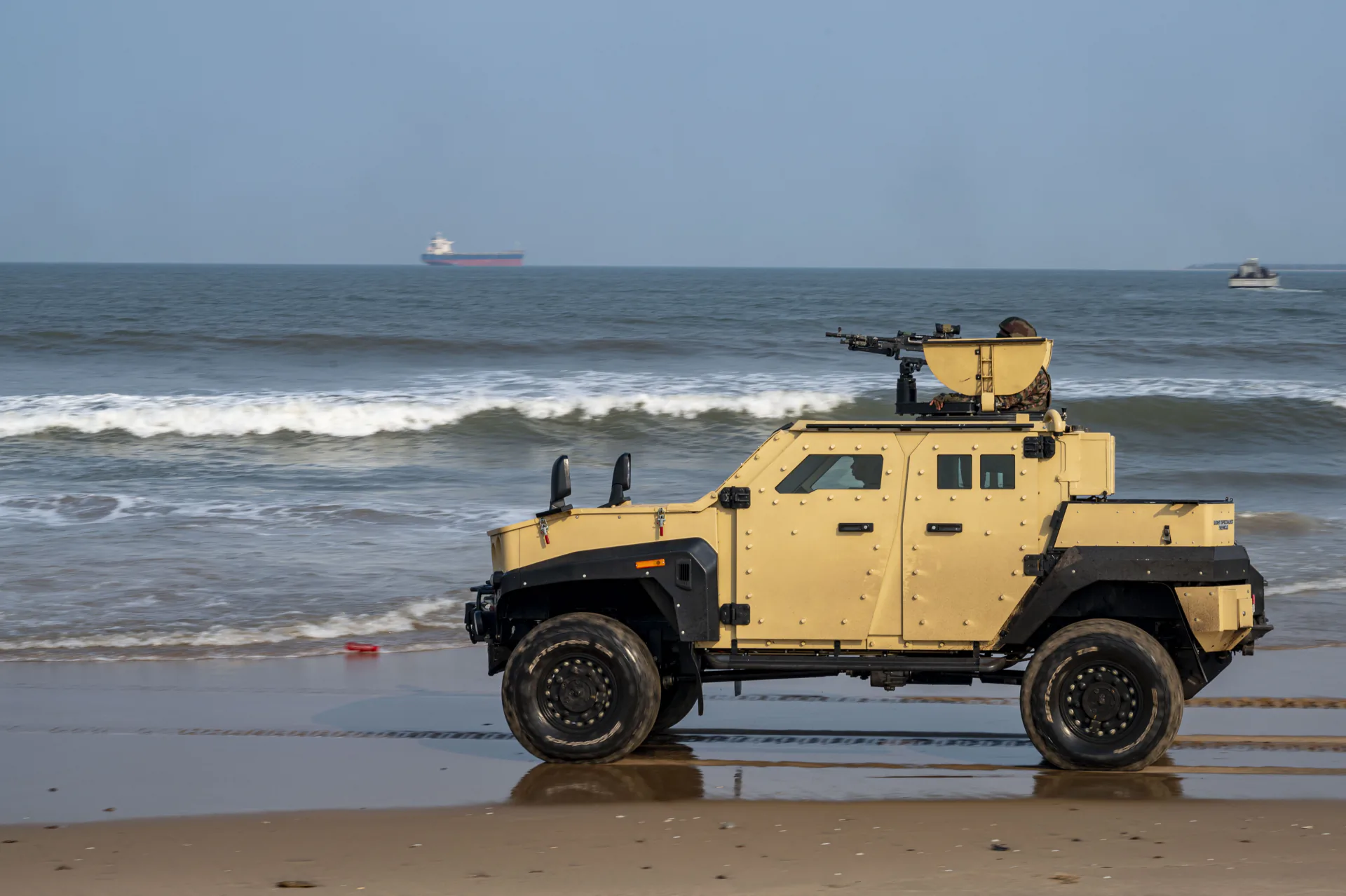
Chemical Tanker NCC Fajr ClassMerchant Marine

Chemical Tanker NCC Fajr Class

Liquid Bulk Hydrocarbon Transport

6.5K Cinema UHD visual of a modern double-hulled chemical carrier. Segregated stainless-steel tanks transport specialized aromatics and petrochemical products through narrow chokepoints.

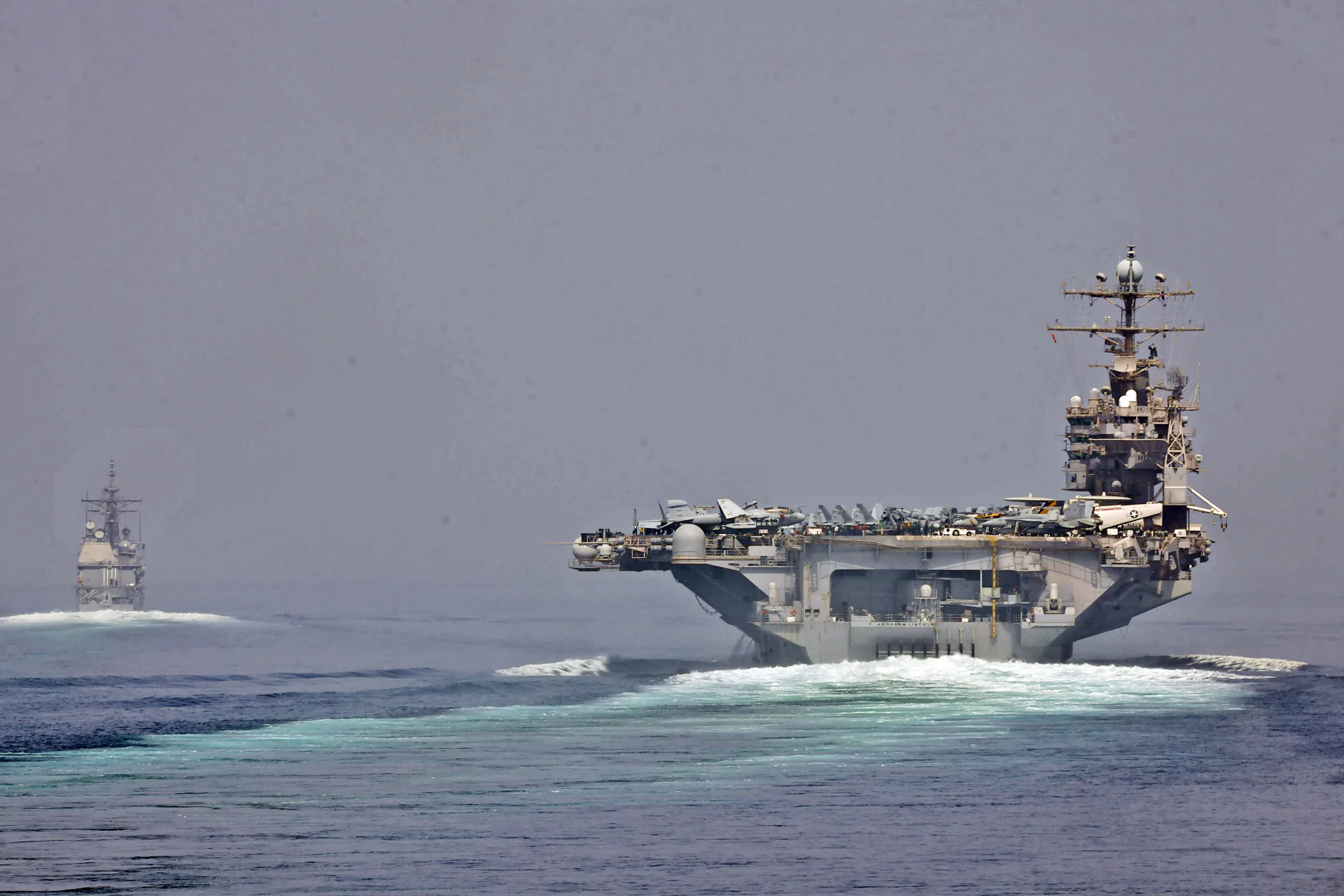
Coalition Guided-Missile Warship PatrolNaval Task Group

Coalition Guided-Missile Warship Patrol

Air-Defense Escort & Interdiction

6K UHD capture of guided-missile surface combatants patrolling the Strait of Hormuz, maintaining active phased-array radar bubbles against low-flying loitering munitions.

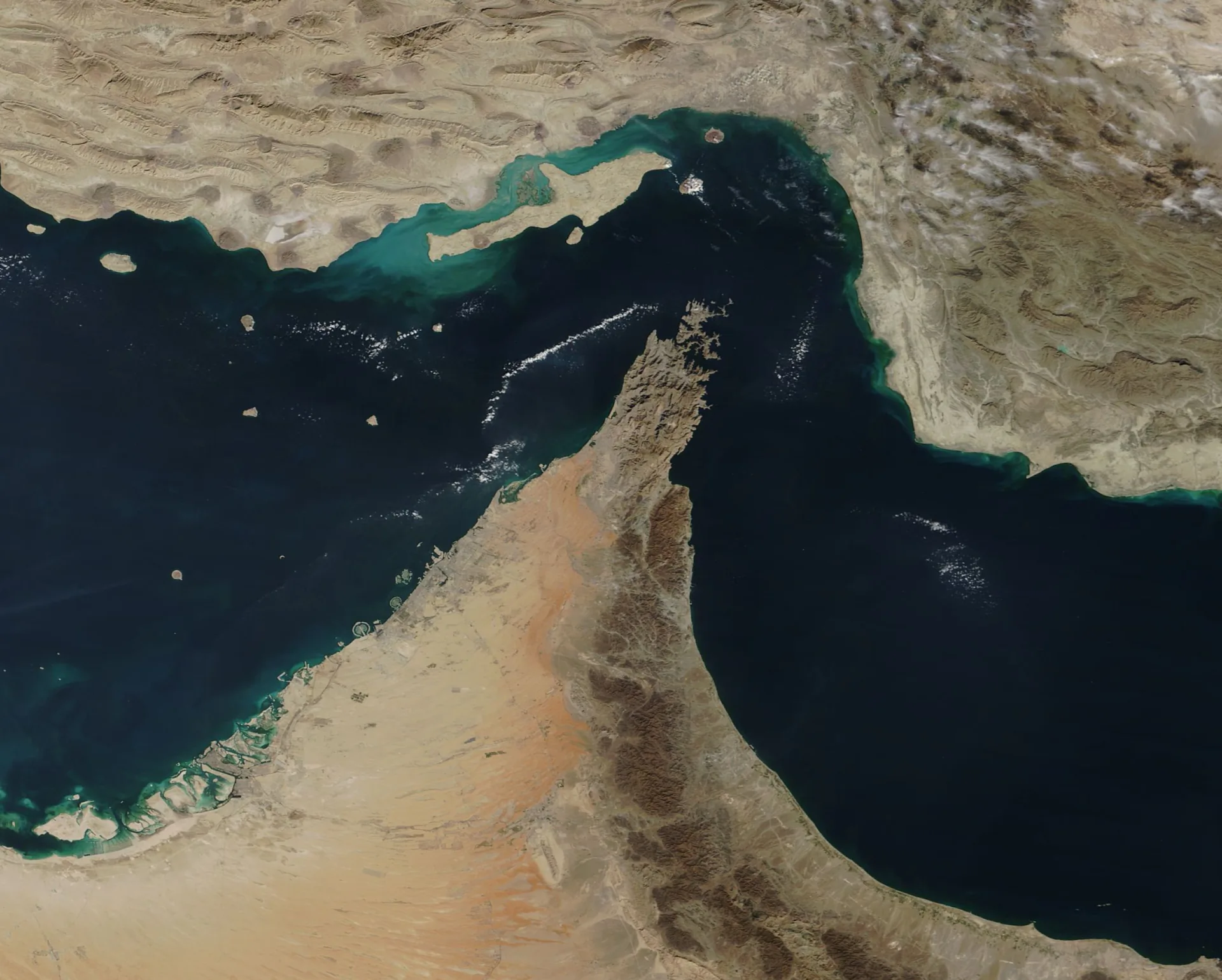
Strait of Hormuz & Musandam PeninsulaOrbital Reconnaissance

Strait of Hormuz & Musandam Peninsula

Strategic Maritime Chokepoint

2.3K High-Resolution satellite orbital telemetry from NASA/MODIS displaying the 21-nautical-mile international transit passage carrying 21 million barrels of oil per day.

MARITIME DEFENSE MATRIX

Operation Sankalp Escort Matrix: Securing India's Energy Lifeline

Geoprimer Flow Analytics
1STAGE 01
Chokepoint Density Warning

Strait of Hormuz narrows to 21 miles; outbound traffic lanes are just 2 miles wide, forcing VLCCs and chemical tankers into predictable coordinates.

21M Barrels/Day
2STAGE 02
Low-RCS Projectile Strike

Low-flying loitering munitions strike tanker superstructure and steering compartments, aiming to disable propulsion without igniting crude reservoirs.

Sub-radar flight altitude
3STAGE 03
DG Shipping Seafarer Grid

Directorate General of Shipping in Mumbai activates real-time communication bridges to safeguard Indian mariners across foreign-flagged vessels.

20,000 Indian Maritimer Hub
4STAGE 04
Indian Navy Kinetic Escort

Indian Navy destroyers under Operation Sankalp provide point-defense radar escort and airborne P-8I surveillance over Indian-flagged and crewed rakes.

3 Warship Standing Task Force

1. The Attack on the NCC Fajr

On Wednesday morning, November 11, 2026, maritime security firms and the United Kingdom Maritime Trade Operations (UKMTO) received an urgent distress relay from the Persian Gulf. The Saudi Arabia-flagged chemical tanker NCC Fajr (IMO 9890599), carrying industrial petrochemicals through the northern approaches of the Strait of Hormuz, reported being struck by an unidentified airborne projectile.

The impact caused localized structural damage to the vessel's upper deck and radar mast but failed to penetrate the double-skinned cargo tanks. Within hours, Union Minister for Ports, Shipping and Waterways Sarbananda Sonowal took to X (formerly Twitter) to reassure the maritime community: all three Indian seafarers serving aboard the vessel were accounted for and completely safe.

Crucially, the attack was not an isolated flashpoint. Just 24 hours prior, a Liberia-flagged crude oil tanker carrying Indian junior officers was targeted by a one-way drone while traversing the southern Persian Gulf, signaling a systematic ratcheting of pressure on commercial maritime corridors.

2. The Silent Stake: India's 20,000 Seafarers in the Crosshairs

While global media frequently frames Gulf maritime conflicts as a duel between Western naval powers and regional non-state actors, India holds the largest human stake on the water. Indian mariners constitute over 12% of the global merchant navy workforce. At any given moment, between 18,000 and 22,000 Indian captains, chief engineers, and deckhands are navigating commercial hulls through the Persian Gulf, Red Sea, and Gulf of Aden.

When vessels fly flags of convenience—such as Liberia, the Marshall Islands, or Panama—their protection often defaults to sovereign naval patrols. Recognizing this asymmetric vulnerability, the Directorate General of Shipping (DGS) in Mumbai established an emergency 24/7 War Room to interface with global ship-management syndicates, ensuring immediate evacuation protocols and insurance guarantees for Indian nationals.

3. Economic Ramifications: War Risk Premiums and Energy Flows

The Strait of Hormuz represents the carotid artery of the Indian economy. India imports roughly 85% of its crude oil requirements, with over 60% of those volumes flowing directly through Hormuz from Iraq, Saudi Arabia, the UAE, and Kuwait. Any disruption to the corridor immediately ripples into domestic retail fuel prices, inflation metrics, and the current account deficit.

Following the strike on the NCC Fajr, London-based maritime insurance syndicates revised their Additional War Risk Premium (AWRP) upwards by 35% for Persian Gulf transits. For a standard Suezmax or VLCC tanker, this translates to an additional 50,000 to 50,000 per voyage in insurance costs alone—a surcharge that is inevitably passed downstream to Asian refiners in Jamnagar, Mangalore, and Paradip.

4. The Operation Sankalp Maritime Shield

In response to the deteriorating security environment, the Indian Navy has quietly fortified 'Operation Sankalp'—a standing maritime security deployment inaugurated in June 2019. Indian guided-missile destroyers and stealth frigates maintain continuous presence in the Gulf of Oman and Persian Gulf, utilizing automated AIS tracking and acoustic sonar to monitor underwater drone hazards.

Naval P-8I Neptune maritime patrol aircraft staging out of INS Hansa (Goa) and INS Rajali (Arakkonam) conduct long-range electronic intelligence (ELINT) sweeps over the chokepoint, relaying tactical radar coordinates to Indian and allied commercial vessels. By pairing diplomatic neutrality with forward naval deterrence, New Delhi is carving out an indispensable role as the primary guarantor of civilian shipping in the northern Indian Ocean.


Filed Under:Geopolitics#Strait of Hormuz#NCC Fajr#Sarbananda Sonowal#Indian Navy#Maritime Security#Energy Geopolitics
Commander Vikramaditya Nair & Energy Desk

Commander Vikramaditya Nair & Energy Desk

OSINT Verified Desk

Strategic Maritime Defense & Energy Chokepoints Analyst

Senior contributor to the Geopolitics desk at Geoprimer, covering strait of hormuz, ncc fajr, sarbananda sonowal and primary-source verification under our Editorial & Verification Charter.

The Diplomatic Dispatch

Get Weekly Geopolitical Intelligence in Your Inbox

Curated analysis of international chokepoints, currency wars, defense treaties, and energy supply shocks. Zero spam, free forever.

Trusted by analysts, civil services aspirants, and foreign policy researchers.

Recommended Geopolitics & Strategic Inquiries

All Geopolitics →
Cab-Cam Audio Exposes Brake Failure: Inside the Digaru Derailment of Kolkata-Sairang Express and India's Kavach Modernization RaceINDIA AffairsTrending
9:16 VERTICAL • 01:00
November 11, 2026•8 min read

Cab-Cam Audio Exposes Brake Failure: Inside the Digaru Derailment of Kolkata-Sairang Express and India's Kavach Modernization Race

In the early morning hours of November 11, 2026, the Kolkata-Sairang Express (Train No. 13125) suffered a high-speed overshoot and derailment at Digaru railway station in the Kamrup Metropolitan district of Assam. While all 1,200 passengers were confirmed safe thanks to mechanical sand hump barriers, leaked cabin voice recordings revealed the locomotive crew shouting 'Red Signal' as emergency brake applications failed to decelerate the train. The incident has thrust the Ministry of Railways' ₹45,000-crore Kavach 4.0 automated collision-prevention rollout into acute national focus.

Pradeep Sengupta & Rail Safety Intelligence Desk

Pradeep Sengupta & Rail Safety Intelligence Desk

Senior Forensic Transportation & Rail Infrastructure Analyst

Watch
The Kulgam Checkpoint Ambush: Indian Security Forces Launch High-Altitude Cordon Across Pir Panjal After Attack on CRPFINDIA AffairsTrending
November 11, 2026•8 min read

The Kulgam Checkpoint Ambush: Indian Security Forces Launch High-Altitude Cordon Across Pir Panjal After Attack on CRPF

At 2:15 PM on November 11, 2026, motorcycle-borne militants launched a sudden drive-by automatic weapons attack against a CRPF checkpost near Mir Bazar in south Kashmir's Kulgam district, injuring three paramilitary personnel from the 46th Battalion. While two troopers sustained non-life-threatening bullet wounds, one remains in critical care at GMC Anantnag. Indian security forces—combining the Indian Army's Rashtriya Rifles, J&K Police Special Operations Group (SOG), and CRPF Quick Reaction Teams—immediately launched a sweeping multi-tier Cordon and Search Operation (CASO) supported by thermal UAVs to track the assailants across the Pir Panjal foothills.

Colonel Raghavan Iyer (Retd.) & Defense Bureau

Colonel Raghavan Iyer (Retd.) & Defense Bureau

Counter-Terrorism, Homeland Security & Special Operations Analyst

Read
Project Indicus: India Clears ₹1.27 Lakh Crore 'Semicon 2.0' to Build Indigenous Military Silicon and AI SuperclustersINDIA AffairsTrending
November 11, 2026•9 min read

Project Indicus: India Clears ₹1.27 Lakh Crore 'Semicon 2.0' to Build Indigenous Military Silicon and AI Superclusters

Following grave vulnerability warnings from senior defense scientists regarding foreign silicon dependencies in Indian strategic missile systems, the Union Cabinet has formally approved 'Semicon 2.0' with an escalated fiscal outlay of ₹1,27,500 crore ($15.2 billion). Anchored by the Tata-PSMC front-end wafer fab at Dholera and operating OSAT facilities by Micron and Kaynes in Sanand, the revised national mission mandates the development of an indigenously architected Indian Graphics Processing Unit (GPU) within 24 months, decoupling India's sovereign AI compute and weapon systems from international choke points.

Dr. Aris Thorne & Tech Strategy Desk

Dr. Aris Thorne & Tech Strategy Desk

Chief Analyst, Semiconductor Geopolitics & Critical Supply Chains

Read