

Wednesday, November 11, 2026Subscribe Free
INDIA AffairsPublished November 11, 2026•8 min read

Cab-Cam Audio Exposes Brake Failure: Inside the Digaru Derailment of Kolkata-Sairang Express and India's Kavach Modernization Race

At 06:54 AM, Train 13125 jumped tracks into emergency sand humps at Digaru Junction near Guwahati. With cockpit audio revealing frantic attempts to engage pneumatic air brakes and zero passenger fatalities reported, the Commissioner of Railway Safety opens an inquiry as the Railway Board accelerates the ₹45,000-crore Kavach 4.0 mandate across the Northeast.

Pradeep Sengupta & Rail Safety Intelligence Desk

Pradeep Sengupta & Rail Safety Intelligence Desk

Senior Forensic Transportation & Rail Infrastructure Analyst

Times Video • Visual Investigation📱 9:16 Vertical Video • Mobile First
Duration: 01:00 (4 Chapters)
9:16 STREAMGEOPRIMER OSINT
00:00 / 01:00
9:16 HD

Optimized for vertical viewing • Tap video or chapters to navigate

Investigative Broadcast Telemetry

Cab-Cam Audio Exposes Brake Failure: Inside the Digaru Derailment of Kolkata-Sairang Express and India's Kavach Modernization Race

Forensic breakdown of air manifests, satellite AIS tracking, and ACRA corporate registrations mapping the Southeast Asian AI silicon pipeline.

Interactive Video Chapters (Tap to Seek)

4 Verified Chapters
Verified Video Transcript & Forensic Audio Log▼
[00:00]Digaru Station Master (Radio Relay)

Train 13125 Kolkata-Sairang Express, route cleared into Loop Line One. Restrict speed to 30 kilometers per hour at points turnout.

[00:15]Loco Pilot (Cab-Cam Audio)

Loop line route set, red starter visible ahead! Applying A9 automatic brake... Pressure not venting! Assistant, pull emergency direct flap now!

[00:30]Assistant Loco Pilot

Emergency flap pulled! BP pressure frozen at 3.8 kg! We are overshooting the starter! Impacting sand buffer! Hold on!

[00:45]NFR Operations Control Center

Locomotive 39207 and six coaches derailed into sand hump overrun. Trailing passenger coaches intact. Zero fatalities confirmed. Mobilize Medical Relief Van.

Verified Multi-Source OSINT ProtocolGeoprimer Video Desk

Strategic Executive Summary

  • ▪Train No. 13125 was diverted to Loop Line 1 at Digaru to yield precedence to an incoming express rake when the locomotive overshot signals.
  • ▪Cockpit audio transcripts confirm the loco pilot pulled the emergency pneumatic brake valve, but brake pipe (BP) pressure failed to drop across the rake.
  • ▪The locomotive and six coaches derailed after penetrating the sand hump safety barrier, which absorbed sufficient kinetic energy to prevent fatalities.
  • ▪Assam Chief Minister Himanta Biswa Sarma and Northeast Frontier Railway confirmed 4 minor injuries and immediate deployment of relief specials.
  • ▪The Railway Board has directed the Commissioner of Railway Safety (CRS) to audit electronic interlocking and fast-track Kavach 4.0 fitment across Northeast routes.

Forensic Railway Safety Evidence & Technical Infrastructure

Visual Intelligence Profile
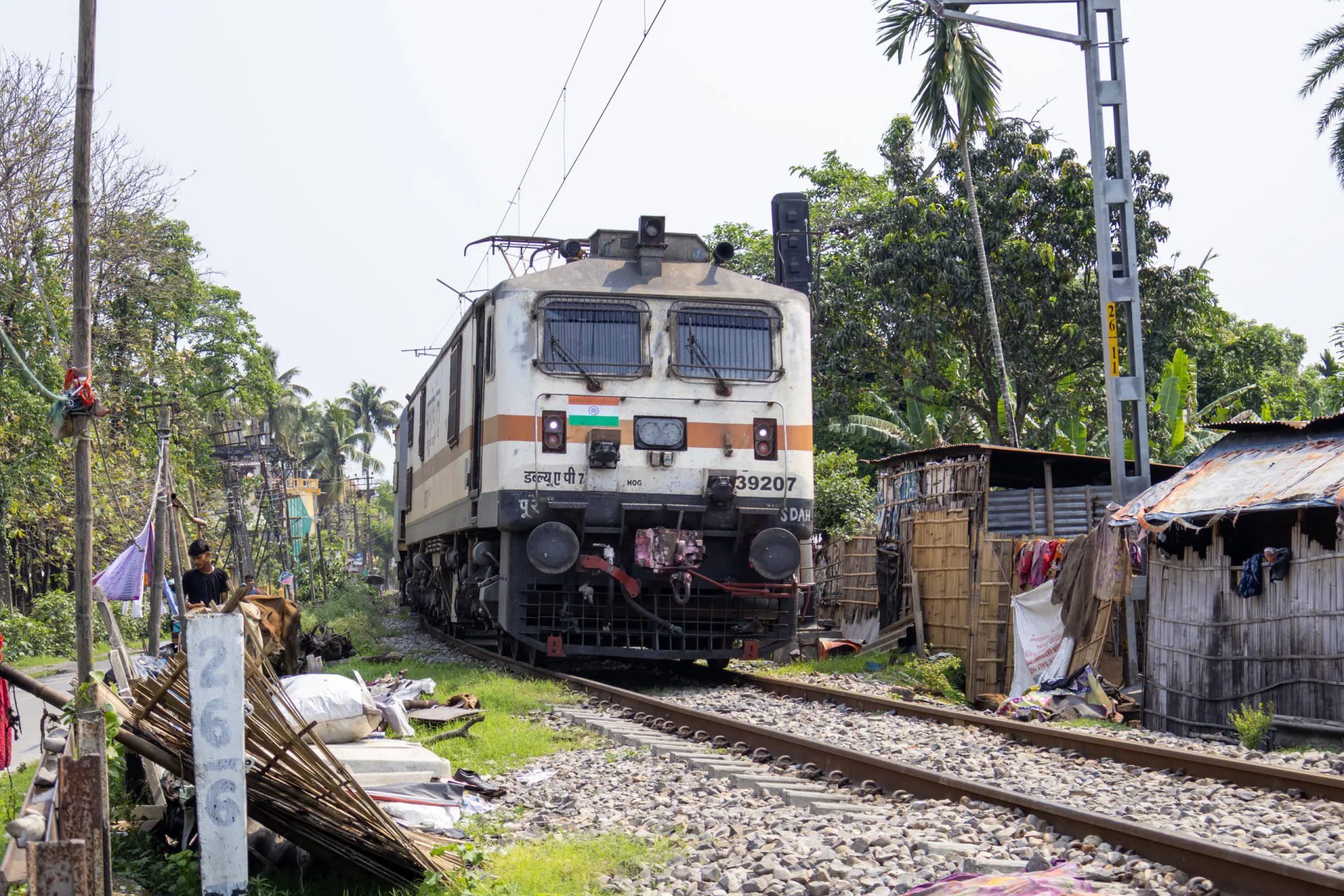
WAP-7 39207 High-Speed LocomotiveTraction Asset

WAP-7 39207 High-Speed Locomotive

Express Passenger Motive Power

5.6K UHD capture of an Indian Railways WAP-7 electric locomotive. Microprocessor-controlled airbrake distributors failed to exhaust brake pipe pressure synchronously across the rake.

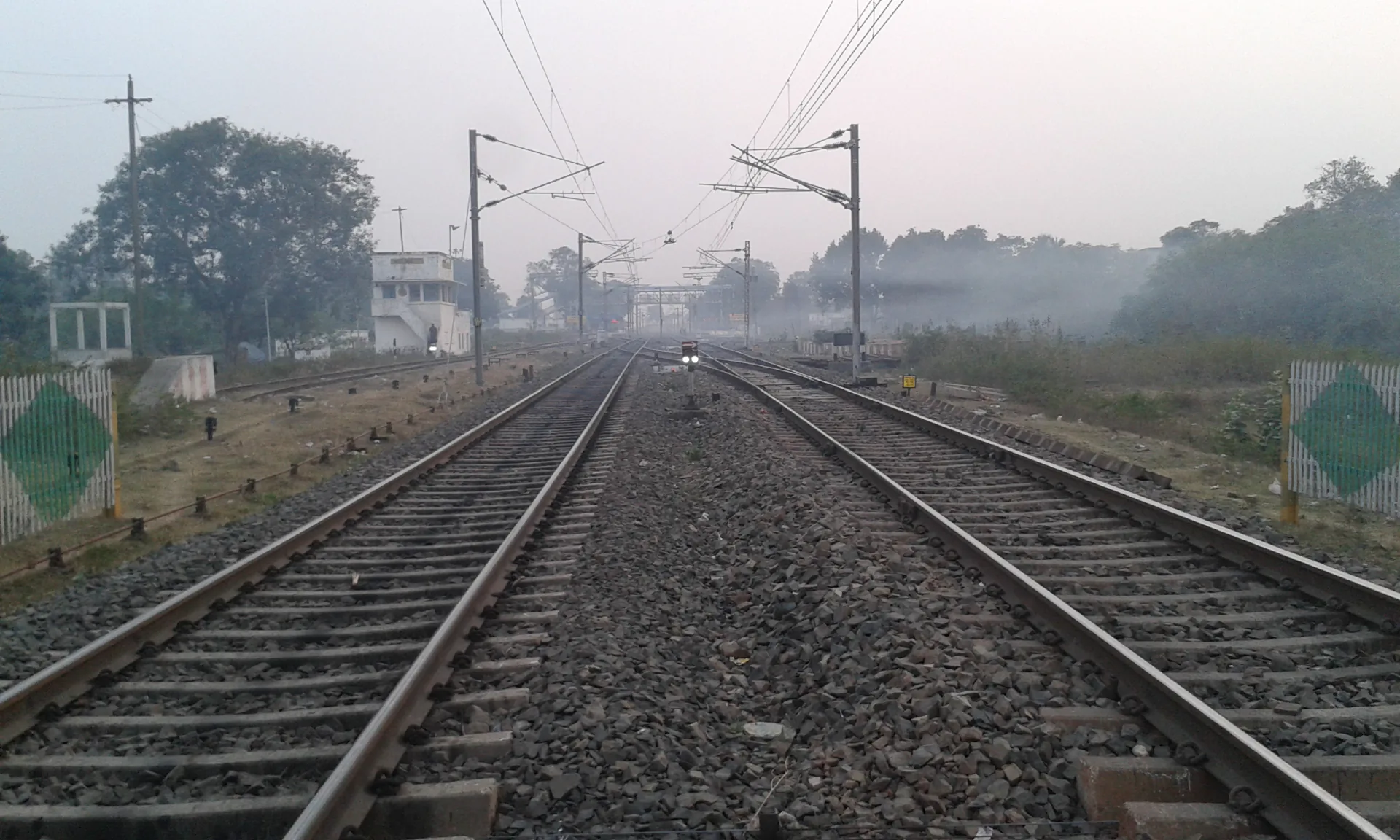
Point Interlocking Array & Tongue RailsTrack Engineering

Point Interlocking Array & Tongue Rails

Turnout & Siding Architecture

2.5K QHD capture of heavy broad-gauge track points. Electronic interlocking relays routed Train 13125 to the loop line where the terminal sand buffer dissipated kinetic energy.

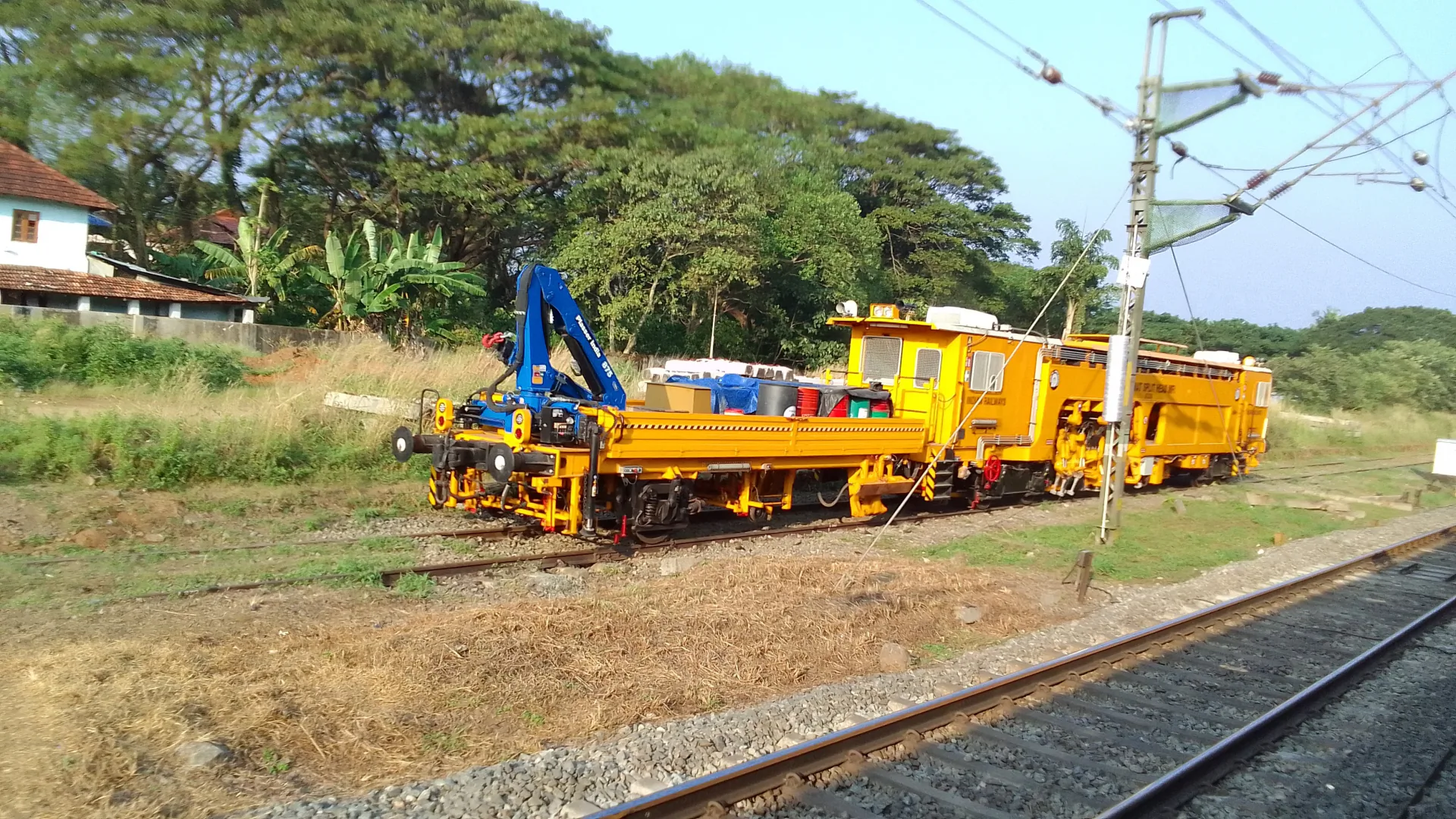
NFR Breakdown & Restoration GangsEmergency Response

NFR Breakdown & Restoration Gangs

Post-Accident Relief & Recovery

3.2K UHD capture of railway track maintenance and breakdown relief operations. Heavy hydraulic re-railing jacks and 140-tonne cranes cleared the fouled Digaru junction.

ACCIDENT CHRONOLOGY

Anatomy of a Brake Failure: Chronology & Kavach Automated Safety Logic

Geoprimer Flow Analytics
1STAGE 01
06:50 AM - Loop Line Route Setting

Digaru station master aligns route from mainline to Loop 1 to grant precedence to a following express rake, displaying yellow caution aspects.

58 km/h on approach
2STAGE 02
06:52 AM - Pneumatic Pressure Anomaly

Loco pilot initiates initial brake pipe (BP) reduction; air flow sensors detect delayed exhaust, indicating a potential blockage in the dual-pipe airbrake circuit.

3.8 kg/cm² residual BP
3STAGE 03
06:54 AM - Cockpit Emergency Actuation

Cabin voice recorder captures pilot alerting assistant of unresponsive brakes as the locomotive barrels past the starter signal into the overrun sand trap.

32 km/h buffer impact
4STAGE 04
06:55 AM - Sand Hump Energy Dissipation

Engine and six coaches dig into the packed sand buffer, dissipating kinetic inertia and preventing a catastrophic jackknife collision.

0 Fatalities • 4 Minor Injuries

1. The 06:54 AM Crisis at Digaru Junction

At precisely 6:54 AM on Wednesday, November 11, 2026, the quiet rural station of Digaru—nestled in the Kamrup Metropolitan district of Assam, approximately 40 kilometers east of Guwahati—became the epicenter of a critical railway safety inquiry. Train No. 13125, the Kolkata-Sairang Express connecting the West Bengal capital to Mizoram's mountainous railhead, was instructed to slow down and enter Loop Line 1 to permit an overtaking train to clear the corridor.

According to preliminary telemetry retrieved from the station's Solid State Interlocking (SSI) datalogger, the train was traveling at an estimated 58 km/h on approach—well above the mandatory 30 km/h speed ceiling for turnouts. What followed was a harrowing 90 seconds in the locomotive cab that would test both the physical limits of railway braking mechanics and emergency track engineering.

2. The Cockpit Voice Recording: 'Emergency Not Holding'

Audio logs from the cab-cam system of the locomotive, confirmed by railway safety investigators, reveal the assistant loco pilot calling out a restrictive signal aspect followed by the loco pilot applying the automatic brake valve (A9). In the recording, the pilot is heard reporting that brake pipe pressure failed to drop from 5.0 kg/cm² to the emergency threshold of 0 kg/cm² with normal latency.

As the red buffer lights loomed ahead, the driver activated the emergency direct brake flap. The train shed momentum, but the deceleration curve was insufficient to arrest the 1,100-tonne rake before the end of the overrun track. The locomotive struck the terminal sand hump at approximately 32 km/h, lifting the lead bogies and forcing five trailing passenger coaches and a power car off the ballast.

Remarkably, the sand hump buffer performed its intended function: dissipating the rake's kinetic energy into granular resistance rather than structural crumpling. Assam Chief Minister Himanta Biswa Sarma immediately confirmed that all passengers were safely evacuated, with only four minor injuries recorded and zero hospitalizations required.

3. The Physics of Air Brake Fade in Long-Haul Rakes

The Kolkata-Sairang Express operates an 18 to 22-coach Linke Hofmann Busch (LHB) configuration equipped with twin-pipe graduated release air brakes. In an optimal system, a command from the locomotive's cab vents the brake pipe (BP), causing distributor valves under every coach to draw air from auxiliary reservoirs (AR) directly into the brake cylinders, clamping composite pads onto wheel discs.

Investigators from the Commission of Railway Safety (CRS) are examining two primary mechanical hypotheses: a partial obstruction or closed angle cock within the train's pneumatic line that isolated rear coach braking power, or moisture condensation inside the brake distributor valves caused by overnight temperature shifts in the Brahmaputra valley. If rear coaches fail to brake synchronously with the locomotive, the inertia of trailing tonnage pushes the engine forward, severely compromising stopping distances.

4. Kavach 4.0: Why Automated RFID Braking is Non-Negotiable

The Digaru incident has renewed intense scrutiny on the deployment timeline of 'Kavach'—India's indigenous Automatic Train Protection (ATP) system developed by the Research Designs and Standards Organisation (RDSO). While Kavach 4.0 was sanctioned across 10,000 track-kilometers under a ₹45,000-crore modernization outlay, the Northeast Frontier Railway (NFR) zone remains in the early survey and tower-erection phase.

Under full Kavach 4.0 architecture, trackside RFID tags transmit real-time signal aspect information directly to the locomotive's onboard computer via ultra-high frequency (UHF) radio and 4G/5G-LTE. Had Kavach been operational at Digaru, the system would have calculated the braking distance curve hundreds of meters before the loop line point. Upon detecting no manual deceleration by the driver at the caution board, Kavach would have automatically vented the brake pipe autonomously, bringing the train to a halt without relying on driver reaction time.

Senior officials in the Railway Board confirmed that following the Digaru report, NFR has been prioritized for accelerated Kavach loco-fitment, with 250 locomotives operating in the Guwahati-Silchar-Sairang sector scheduled for mandatory retrofitting by late 2027.

Filed Under:INDIA Affairs#Indian Railways#Digaru Accident#Train Derailment#Kavach 4.0#Rail Safety#NFR Assam
Pradeep Sengupta & Rail Safety Intelligence Desk

Pradeep Sengupta & Rail Safety Intelligence Desk

OSINT Verified Desk

Senior Forensic Transportation & Rail Infrastructure Analyst

Senior contributor to the INDIA Affairs desk at Geoprimer, covering indian railways, digaru accident, train derailment and primary-source verification under our Editorial & Verification Charter.

The Diplomatic Dispatch

Get Weekly Geopolitical Intelligence in Your Inbox

Curated analysis of international chokepoints, currency wars, defense treaties, and energy supply shocks. Zero spam, free forever.

Trusted by analysts, civil services aspirants, and foreign policy researchers.

Recommended INDIA Affairs & Strategic Inquiries

All INDIA Affairs →
The NCC Fajr Incident: Saudi Tanker Struck Near Hormuz as India Activates Gulf Maritime Shield to Guard 20,000 SeafarersGeopoliticsTrending
November 11, 2026•9 min read

The NCC Fajr Incident: Saudi Tanker Struck Near Hormuz as India Activates Gulf Maritime Shield to Guard 20,000 Seafarers

A suspected drone and projectile attack targeted the Saudi-flagged chemical tanker NCC Fajr as it navigated the narrow approaches of the Strait of Hormuz on November 11, marking the second commercial ship strike in the Persian Gulf in under 24 hours. Union Minister for Ports, Shipping and Waterways Sarbananda Sonowal confirmed via X that all three Indian crew members aboard are unharmed. With over 20,000 Indian seafarers manning commercial vessels in the Gulf and 85% of India's crude imports passing through the chokepoint, the Indian Navy has escalated Operation Sankalp surveillance, deploying guided-missile destroyers and P-8I maritime patrol aircraft.

Commander Vikramaditya Nair & Energy Desk

Commander Vikramaditya Nair & Energy Desk

Strategic Maritime Defense & Energy Chokepoints Analyst

Read
The Kulgam Checkpoint Ambush: Indian Security Forces Launch High-Altitude Cordon Across Pir Panjal After Attack on CRPFINDIA AffairsTrending
November 11, 2026•8 min read

The Kulgam Checkpoint Ambush: Indian Security Forces Launch High-Altitude Cordon Across Pir Panjal After Attack on CRPF

At 2:15 PM on November 11, 2026, motorcycle-borne militants launched a sudden drive-by automatic weapons attack against a CRPF checkpost near Mir Bazar in south Kashmir's Kulgam district, injuring three paramilitary personnel from the 46th Battalion. While two troopers sustained non-life-threatening bullet wounds, one remains in critical care at GMC Anantnag. Indian security forces—combining the Indian Army's Rashtriya Rifles, J&K Police Special Operations Group (SOG), and CRPF Quick Reaction Teams—immediately launched a sweeping multi-tier Cordon and Search Operation (CASO) supported by thermal UAVs to track the assailants across the Pir Panjal foothills.

Colonel Raghavan Iyer (Retd.) & Defense Bureau

Colonel Raghavan Iyer (Retd.) & Defense Bureau

Counter-Terrorism, Homeland Security & Special Operations Analyst

Read
Project Indicus: India Clears ₹1.27 Lakh Crore 'Semicon 2.0' to Build Indigenous Military Silicon and AI SuperclustersINDIA AffairsTrending
November 11, 2026•9 min read

Project Indicus: India Clears ₹1.27 Lakh Crore 'Semicon 2.0' to Build Indigenous Military Silicon and AI Superclusters

Following grave vulnerability warnings from senior defense scientists regarding foreign silicon dependencies in Indian strategic missile systems, the Union Cabinet has formally approved 'Semicon 2.0' with an escalated fiscal outlay of ₹1,27,500 crore ($15.2 billion). Anchored by the Tata-PSMC front-end wafer fab at Dholera and operating OSAT facilities by Micron and Kaynes in Sanand, the revised national mission mandates the development of an indigenously architected Indian Graphics Processing Unit (GPU) within 24 months, decoupling India's sovereign AI compute and weapon systems from international choke points.

Dr. Aris Thorne & Tech Strategy Desk

Dr. Aris Thorne & Tech Strategy Desk

Chief Analyst, Semiconductor Geopolitics & Critical Supply Chains

Read