

Wednesday, November 11, 2026Subscribe Free
Defense & SecurityPublished November 11, 2026•7 min read

The Bab-el-Mandeb Chokepoint: Assessing the $1 Trillion Rerouting of Eurasian Maritime Freight

How asymmetric naval drone warfare shattered the Suez Canal transit corridor and triggered the longest commercial shipping detour since 1869.

Capt. Rajesh K. Nair

Capt. Rajesh K. Nair

Visiting Fellow, Indian Ocean Naval Security & Strategic Corridors

The Bab-el-Mandeb Chokepoint: Assessing the $1 Trillion Rerouting of Eurasian Maritime Freight
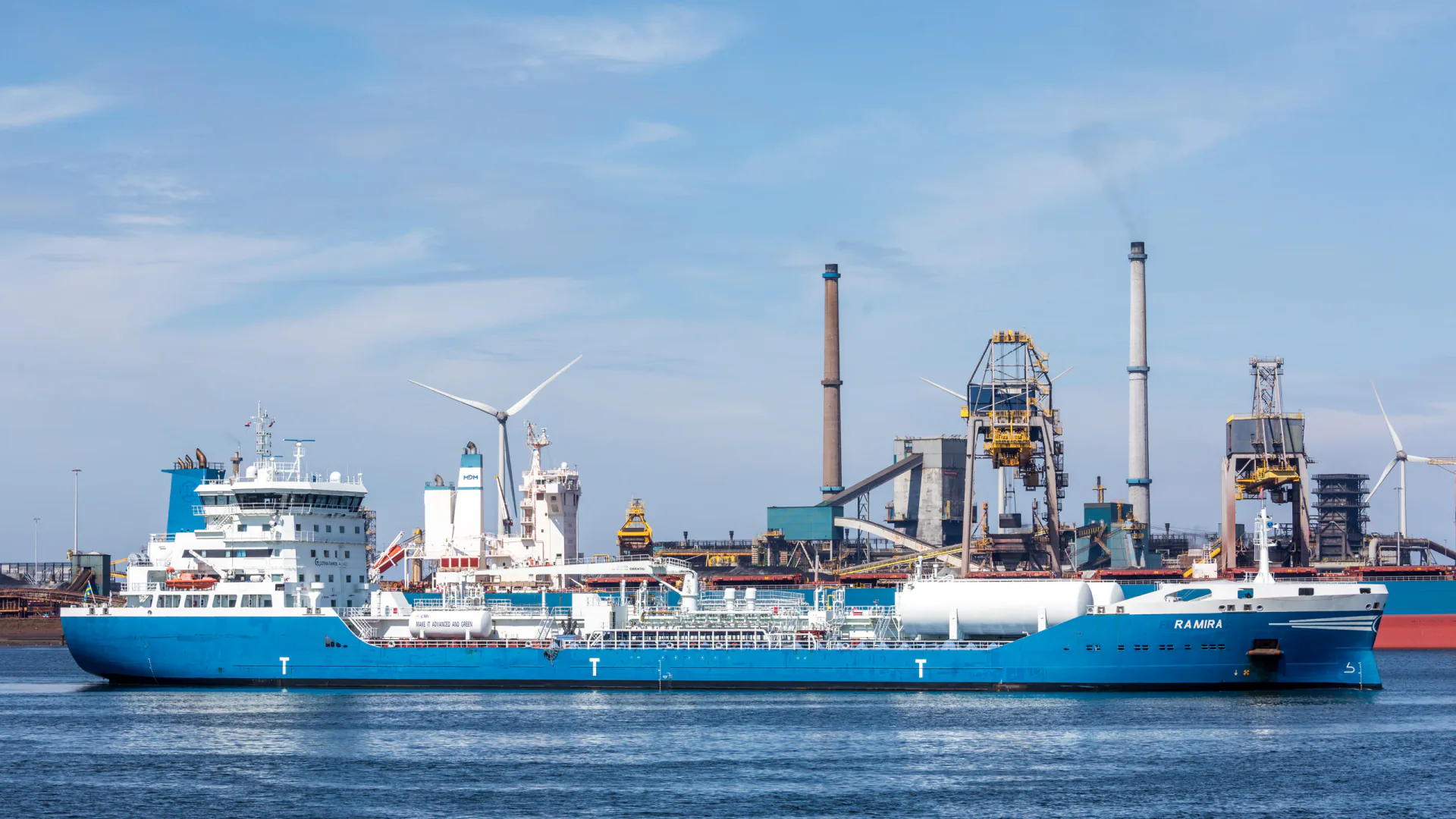
Ultra-large container vessel rounding the Cape of Good Hope, bypassing the high-risk southern Red Sea corridor.

Strategic Executive Summary

  • ▪Rerouting around the Cape of Good Hope adds 10 to 14 days of sailing time and roughly 3,500 nautical miles per one-way transit between East Asia and Northern Europe.
  • ▪The interception cost asymmetry remains staggering: coalition destroyers routinely fire $2.1M SM-2 or Aster-30 surface-to-air missiles against $18,000 Shahed-derivative UAVs.
  • ▪Suez Canal Authority transit revenues have plummeted by over 60%, severely constraining Egypt's primary source of sovereign hard currency reserves.
  • ▪Southern bunkering ports including Port Louis (Mauritius), Durban (South Africa), and Walvis Bay (Namibia) have seen marine low-sulfur fuel oil demand surge by over 140%.

1. The Closure of the Maritime Highway

The Bab-el-Mandeb Strait—a narrow 18-mile maritime throat linking the Gulf of Aden to the Red Sea—has historically served as the conduit for roughly 12% of total global seaborne trade and nearly 30% of global container traffic. Today, it stands as the prime exhibit of how low-cost anti-access/area-denial (A2/AD) capabilities can paralyze commercial mega-infrastructure.

Container liners such as Maersk, MSC, and CMA CGM have institutionalized the Cape of Good Hope route as standard operational procedure. What was initially treated as an emergency contingency has settled into a semi-permanent restructuring of global ocean logistics, absorbing over 1.2 million TEU (twenty-foot equivalent units) of vessel capacity purely to maintain weekly service frequencies across extended rotations.

⚡ Key Intelligence Marker
"+3,500 Nautical Miles and $1.1M in extra fuel costs per single container voyage around the Cape of Good Hope compared to the direct Suez routing."

— Clarksons Shipping Intelligence

2. The Cost Asymmetry of Air Defense

Operation Prosperity Guardian and European Union naval missions have demonstrated unparalleled technical competence in shooting down anti-ship cruise missiles (ASCMs) and anti-ship ballistic missiles (ASBMs). However, the underlying attrition economics are fundamentally unsustainable.

A modern Arleigh Burke-class destroyer or Horizon frigate carries a finite magazine of 32 to 96 vertical launch system (VLS) cells. Reloading these cells requires returning to certified shore cranes—facilities absent in the southern Red Sea theater. When a multi-million-dollar interceptor is expended against a composite drone constructed with off-the-shelf civilian navigation chipsets, the economic victory belongs entirely to the asymmetric belligerent.

⚡ Key Intelligence Marker
"We are trading $2 million missiles for $20,000 drones. In a protracted war of industrial attrition, no naval fleet in history has maintained maritime supremacy on that balance sheet."

— Rear Adm. (Ret.) Julian Vance, Maritime Defense Review

3. Strategic Shockwaves on the African Rim

The bypass has produced sudden winners and structural losers. Egypt faces an acute macroeconomic crunch, with Suez revenues diving from $9.4 billion annually to under $3.8 billion, compounding severe sovereign debt restructuring negotiations with international lenders.

Conversely, coastal nations along the western and southern African seaboard have emerged as vital logistical nodes. Bunkering terminals in Mauritius, South Africa, and Namibia have experienced historic congestion, prompting international terminal operators to commit emergency capital expenditures toward modernizing deep-water anchorages and fuel bunkering barges.


Filed Under:Defense & Security#Red Sea#Maritime Logistics#Bab-el-Mandeb#Defense Doctrine#Naval Warfare#Suez Canal
Capt. Rajesh K. Nair

Capt. Rajesh K. Nair

OSINT Verified Desk

Visiting Fellow, Indian Ocean Naval Security & Strategic Corridors

Senior contributor to the Defense & Security desk at Geoprimer, covering red sea, maritime logistics, bab-el-mandeb and primary-source verification under our Editorial & Verification Charter.

The Diplomatic Dispatch

Get Weekly Geopolitical Intelligence in Your Inbox

Curated analysis of international chokepoints, currency wars, defense treaties, and energy supply shocks. Zero spam, free forever.

Trusted by analysts, civil services aspirants, and foreign policy researchers.

Recommended Defense & Security & Strategic Inquiries

All Defense & Security →
Cab-Cam Audio Exposes Brake Failure: Inside the Digaru Derailment of Kolkata-Sairang Express and India's Kavach Modernization RaceINDIA AffairsTrending
9:16 VERTICAL • 01:00
November 11, 2026•8 min read

Cab-Cam Audio Exposes Brake Failure: Inside the Digaru Derailment of Kolkata-Sairang Express and India's Kavach Modernization Race

In the early morning hours of November 11, 2026, the Kolkata-Sairang Express (Train No. 13125) suffered a high-speed overshoot and derailment at Digaru railway station in the Kamrup Metropolitan district of Assam. While all 1,200 passengers were confirmed safe thanks to mechanical sand hump barriers, leaked cabin voice recordings revealed the locomotive crew shouting 'Red Signal' as emergency brake applications failed to decelerate the train. The incident has thrust the Ministry of Railways' ₹45,000-crore Kavach 4.0 automated collision-prevention rollout into acute national focus.

Pradeep Sengupta & Rail Safety Intelligence Desk

Pradeep Sengupta & Rail Safety Intelligence Desk

Senior Forensic Transportation & Rail Infrastructure Analyst

Watch
The NCC Fajr Incident: Saudi Tanker Struck Near Hormuz as India Activates Gulf Maritime Shield to Guard 20,000 SeafarersGeopoliticsTrending
November 11, 2026•9 min read

The NCC Fajr Incident: Saudi Tanker Struck Near Hormuz as India Activates Gulf Maritime Shield to Guard 20,000 Seafarers

A suspected drone and projectile attack targeted the Saudi-flagged chemical tanker NCC Fajr as it navigated the narrow approaches of the Strait of Hormuz on November 11, marking the second commercial ship strike in the Persian Gulf in under 24 hours. Union Minister for Ports, Shipping and Waterways Sarbananda Sonowal confirmed via X that all three Indian crew members aboard are unharmed. With over 20,000 Indian seafarers manning commercial vessels in the Gulf and 85% of India's crude imports passing through the chokepoint, the Indian Navy has escalated Operation Sankalp surveillance, deploying guided-missile destroyers and P-8I maritime patrol aircraft.

Commander Vikramaditya Nair & Energy Desk

Commander Vikramaditya Nair & Energy Desk

Strategic Maritime Defense & Energy Chokepoints Analyst

Read
The Kulgam Checkpoint Ambush: Indian Security Forces Launch High-Altitude Cordon Across Pir Panjal After Attack on CRPFINDIA AffairsTrending
November 11, 2026•8 min read

The Kulgam Checkpoint Ambush: Indian Security Forces Launch High-Altitude Cordon Across Pir Panjal After Attack on CRPF

At 2:15 PM on November 11, 2026, motorcycle-borne militants launched a sudden drive-by automatic weapons attack against a CRPF checkpost near Mir Bazar in south Kashmir's Kulgam district, injuring three paramilitary personnel from the 46th Battalion. While two troopers sustained non-life-threatening bullet wounds, one remains in critical care at GMC Anantnag. Indian security forces—combining the Indian Army's Rashtriya Rifles, J&K Police Special Operations Group (SOG), and CRPF Quick Reaction Teams—immediately launched a sweeping multi-tier Cordon and Search Operation (CASO) supported by thermal UAVs to track the assailants across the Pir Panjal foothills.

Colonel Raghavan Iyer (Retd.) & Defense Bureau

Colonel Raghavan Iyer (Retd.) & Defense Bureau

Counter-Terrorism, Homeland Security & Special Operations Analyst

Read