




1. The 6,000-Kilometer Sky Train: Joint IAF-Navy Precision
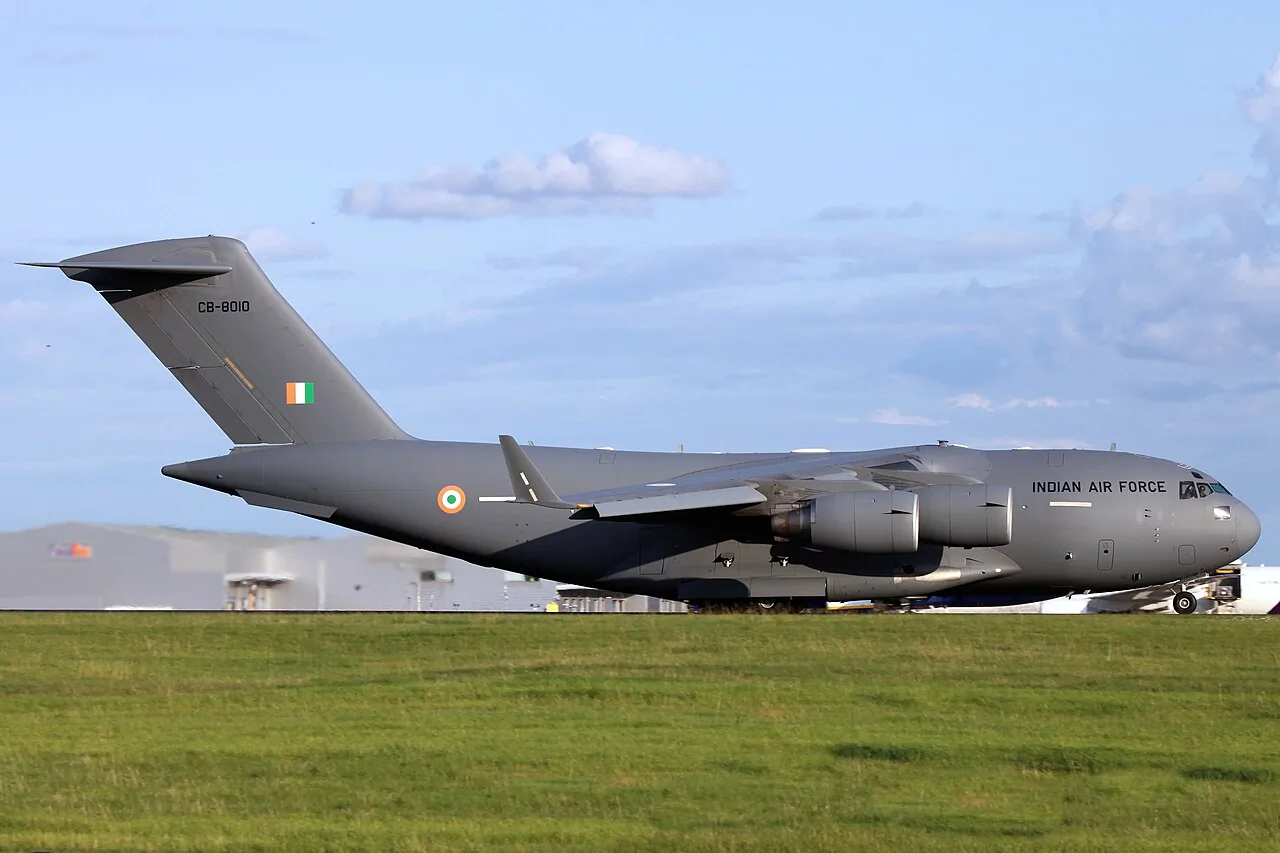
In the pre-dawn darkness over the Arabian Sea, an Indian Air Force C-17 Globemaster III heavy transport aircraft throttled down its four Pratt & Whitney turbofans, descending to 8,000 feet into turbulent maritime airspace over 3,000 kilometers from the Indian coastline. Aboard the cavernous cargo bay, green jump lights illuminated two heavy payload pallets containing rigid-hull inflatable combat boats (RHIBs) and a 12-man detachment of the Indian Navy's elite Marine Commandos (MARCOS).
Within ninety seconds, the hydraulic aft ramp lowered into the slipstream. Precision drogue parachutes extracted the combat craft directly into the high swells, immediately followed by the assault commandos. The 8-hour, 6,000-kilometer non-stop mission from Jamnagar Air Force Base represents the longest combat airdrop operation in the history of Indian armed forces.
2. The Resurgence of the 'Mother Ship': Somali Piracy 2.0
Operation Sankalp-Deep was catalyzed by an ominous development in maritime criminality: the aggressive comeback of Somali pirate syndicates utilizing hijacked fishing dhows as long-range 'mother ships.' Taking opportunistic advantage of Western naval coalitions being pinned down by missile and drone exchanges in the southern Red Sea, pirate clans from Puntland ventured over 1,000 nautical miles east into the open Indian Ocean.
Their prime target was the Iranian-flagged fishing vessel FV Azini, hijacked off the Horn of Africa. Armed with RPG-7s and heavy machine guns, the pirates intended to use the Azini to launch swarming skiff attacks against commercial crude tankers transiting towards the Strait of Hormuz.
"Over 65% of India's crude petroleum imports and $180 billion in bilateral trade transit the exact sea lines of communication currently patrolled by Indian Navy Task Force 54."
— Indian Directorate of Naval Intelligence Review
3. The Midnight Takedown: 18 Minutes to Hostage Freedom
Coordinated in real-time by a circling Boeing P-8I Neptune maritime reconnaissance aircraft, the MARCOS assault craft closed on the FV Azini under zero-illumination conditions. Scaling the vessel's starboard freeboard using pneumatic magnetic ladders, the assault team breached the bridge and engine room simultaneously.
In an intense, disciplined 18-minute engagement, all six pirate combatants were subdued and disarmed without a single shot fired by the hostages. All 20 crew members were safely liberated, and the vessel's propulsion systems were secured before the pirates could execute scuttling charges.
4. The MAHASAGAR Doctrine: India as the Indispensable Anchor
Within hours of the takedown, guided-missile destroyer INS Kolkata rendezvoused with the seized vessel, deploying medical personnel and naval technical teams. The mission underscores the operational maturity of New Delhi’s MAHASAGAR doctrine (Mutual and Holistic Advancement for Security and Growth Across Regions).
While international shipping lanes remain vulnerable to asymmetric crises from Suez to Malacca, the Indian Navy has demonstrated that it possesses the expeditionary reach, intelligence telemetry, and political resolve to act as the sole net security provider across the Indian Ocean.
"The Indian Ocean is our namesake and our foremost strategic responsibility. We will not allow international waters to degenerate into an ungoverned battlespace."
— Admiral Dinesh K. Tripathi, Chief of the Naval Staff