

A Trade Notice Closes an Industrial Bleed
On November 10, 2026, via Notification No. 49/2026-27, the Directorate General of Foreign Trade (DGFT) altered a single line in India’s export ledger under ITC(HS) Code 85491400—converting exports of Lithium-Ion Battery Black Mass from "Free" to "Prohibited" with immediate effect (leaving only narrow transitional clearance under Para 1.05 of Foreign Trade Policy 2023).
At first glance, banning shipments of crushed industrial waste looks niche. Look closer at the timing—two days before more than 3,800 policymakers and global executives from roughly 58 countries convene today (November 12–13) in Visakhapatnam for the 31st CII Partnership Summit—and it signals a sharp pivot in India’s industrial strategy. New Delhi is sealing off secondary critical-mineral outflow so domestic chemical refiners stop shipping raw value overseas.
What Actually Sits Inside Black Mass
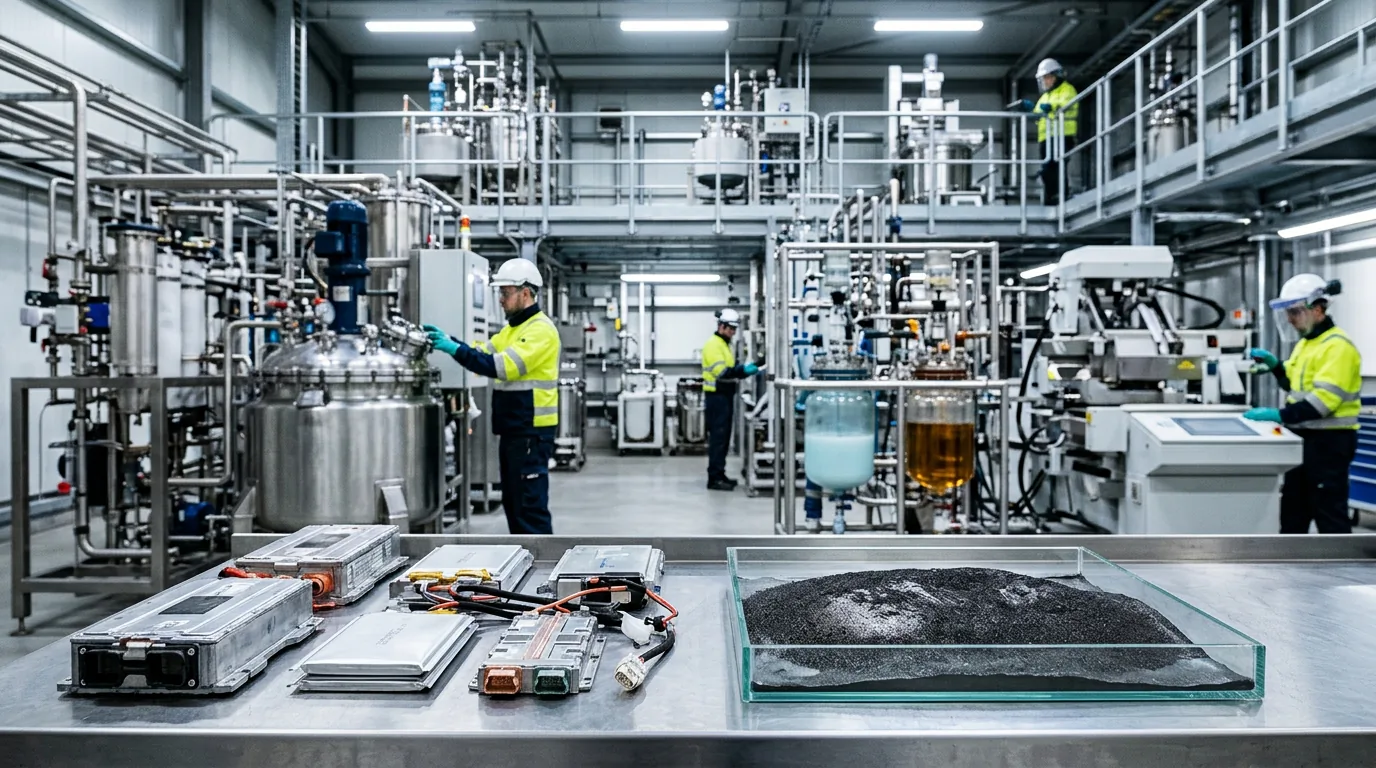
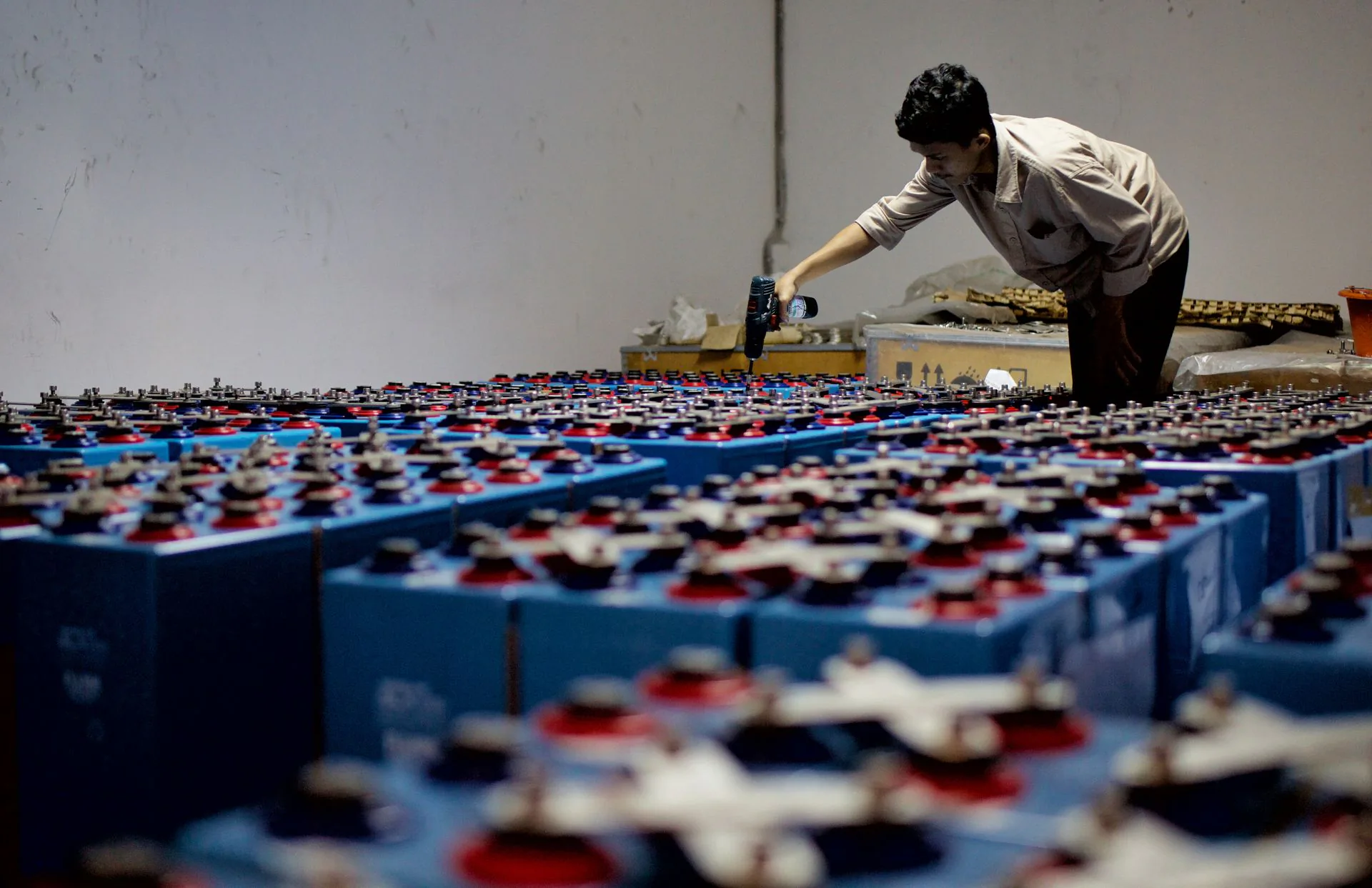
Black Mass is the dense, granular grey-black powder left once spent EV battery modules, discarded mobile-phone packs, and cell-manufacturing trimmings are discharged, crushed, and mechanically sieved. Unlike raw mining ore that often carries under 1%–2% metal concentration in remote mountains, Black Mass acts as ultra-rich concentrated secondary ore packed with recoverable lithium, cobalt, nickel, and manganese.
Code 85491400 specifically spans waste and scrap of unsorted primary cells and electric accumulators free of lead, cadmium, or mercury. Rather than enduring multi-year geological exploration cycles, hydrometallurgical plants dissolve this powder in chemical leaching tanks and precipitate pure battery-grade sulfates and carbonates ready for brand-new cell cathodes—a process known across clean-tech policy as "urban mining."
Why Indian Recyclers Ran Hungry While Domestic Scrap Sailed Abroad
Ministry of Commerce disclosures surrounding the prohibition expose a glaring supply-chain asymmetry that hurt domestic builders over the past several years. India encouraged private recyclers to establish formal shredding and mineral-separation plants to reduce reliance on imported battery metals. Yet because foreign chemical complexes held deeper refining scale and offered prompt export buyers attractive cash rates for unrefined Black Mass, Indian aggregators shipped local powder straight out of ports.
Left starved of predictable domestic feed, certified Indian recycling units ran below rated capacity—and in several instances even had to import battery scrap from overseas just to keep reactors operating. Prohibiting Black Mass exports directly breaks that loop, reserving Indian-origin scrap strictly for audited Indian chemical extraction in line with domestic environmental safeguards.
"While domestic battery-mineral refining capacity grew considerably, under-utilization forced local plants to seek imported feedstock even as Indian-generated Black Mass flowed freely overseas—an imbalance the ban immediately shuts down."
— Ministry of Commerce & Industry / PIB Policy Brief (Notification No. 49/2026-27)
Closing the ₹1,500-Crore NCMM Value Loop
The trade restriction is designed to interlock directly with New Delhi’s domestic industrial subsidy architecture. Under the National Critical Mineral Mission (NCMM), the Union Cabinet approved a ₹1,500-crore Incentive Scheme in September 2025 dedicated specifically to expanding domestic separation and refining capacity from secondary battery and electronic waste.
Subsidizing chemical plant capex only yields strategic independence if guaranteed raw feedstock flows steadily to those factory gates. Combined with global peers moving simultaneously to keep battery scrap at home, India’s export ban protects domestic hydrometallurgy unit economics and shields Advanced Chemistry Cell (ACC) battery makers, electric two-wheeler firms, and grid-storage builders from volatile foreign precursor pricing.
Enforcement Catch at Ports and the Visakhapatnam Policy Signal
Trade prohibitions succeed or fail inside customs sheds. Because ITC(HS) 85491400 encompasses broader non-lead cell scrap alongside Black Mass, customs laboratories will need tight physical sampling checks to stop unscrupulous traders from mis-declaring processed powder under adjacent scrap headings. At the same time, informal scrap brokers lose export price arbitrage and will need faster onboarding into formal producer-responsibility contracts with licensed Indian refiners.
Against the backdrop of the 31st CII Partnership Summit opening in Visakhapatnam today—co-chaired by Union Commerce Minister Piyush Goyal and Andhra Pradesh Chief Minister N. Chandrababu Naidu under the banner of technology, trust, and resilient trade—the timing underscores India’s intent: partners are invited to invest in domestic refining and clean-tech manufacturing inside India, not treat Indian cities as cheap raw-scrap mines.